Sinkholes can be the stuff of nightmares: the ground suddenly opens up to swallow a car, a home or an entire block. But such extreme damage, formally referred to as “catastrophic ground cover collapse” in insurance parlance, is actually quite rare. Instead, sinkholes are generally smaller depressions that may become a pricey nuisance rather than a life-threatening disaster.
What’s a sinkhole?
Sinkholes typically form when naturally acidic rainwater erodes underlying bedrock, creating damage beneath the surface. Their formation is most common in easily erodible karst terrains with carbonate rocks, like limestone or dolomite, or minerals known as evaporites, like salt and gypsum.
When groundwater seeps into cracks and then pools beneath the surface, it wears away these rocks and leads to the formation of underground caves and other openings. Soil particles fall into these gaps too, enlarging the chasms and facilitating the collection of more water. A sinkhole forms when these chewed-up sublayers can no longer support surface sediments hovering over the void left by erosion. Usually, little or no change is noticeable from above as this destructive process is underway, which could take hundreds or thousands of years. Drought or heavy rain can exacerbate sinkhole risk, as can human activities like heavy pumping of groundwater or construction.
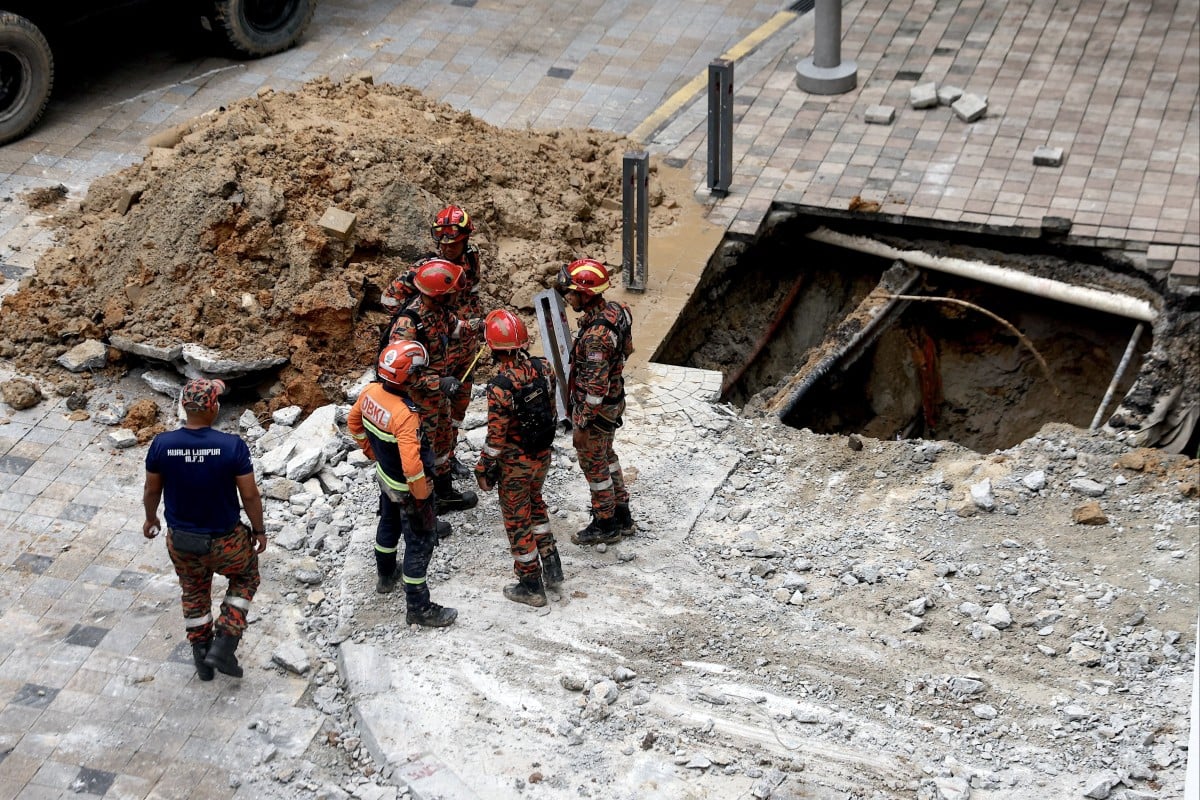

Sinkhole happened in Kuala Lumpur, Malaysia
What do sinkholes look like?
Sinkhole sizes vary dramatically—they can be a few feet or stretch to hundreds of acres. Their depth varies too: Some are less than one foot deep whereas others are more than 100 feet. Sinkholes can look like shallow bowls or like a collapsed void with steep, vertical walls. When water collects in sinkholes, sometimes ponds are formed.
Resources: National Geographic
https://www.nationalgeographic.com/environment/article/sinkhole
Date of Input: 23/09/2024 | Updated: 22/10/2024 | aslamiah
MEDIA SHARING